

The difference between good strategy and great strategy often comes down to the rigor of your foundational analysis. SWET isn't just a reordered acronym—it's a discipline that separates data-driven decisions from expensive guesswork.
I've reviewed more than 200 strategic plans in the past decade. In 80% of them, the SWOT analysis was essentially useless—filled with wishful thinking disguised as strategy. Teams jump into SWOT analysis to begin strategy planning sessions and walk away with nothing new, often just rubber-stamping decisions already made or reinforcing existing biases.
When SWOT becomes a checkbox exercise, organizations waste months pursuing "opportunities" that are really just internal preferences with no market validation. I've seen companies invest significantly based on flawed analysis that could have been avoided with better discipline upfront.
I've been teaching SWOT analysis for a decade at several universities and been a practitioner for far longer. Nearly every SWOT I see makes the same fundamental mistakes. But when done correctly, this assessment tool remains one of the most effective foundations for strategic planning.
Here's how to fix it.
Step 1: Reframe SWOT as SWET
Start with SWET instead of SWOT to avoid the biggest mistake leaders make with traditional strategic assessment.
SWET stands for Strengths, Weaknesses, External opportunities, and Threats. This simple reordering forces you to properly categorize your analysis from the start.
The problem with traditional SWOT is that "opportunities" becomes a catch-all brainstorming bucket where teams dump everything they think they should do, rather than focusing on actual external market conditions. By repositioning opportunities as "External opportunities" in the SWET framework, you're reminded that this quadrant should only contain positive external market forces and data points—not internal action items.
The External Opportunities quadrant should contain facts, not activities. So many executives use this section as a brainstorming board rather than simply gathering available market data for analysis.
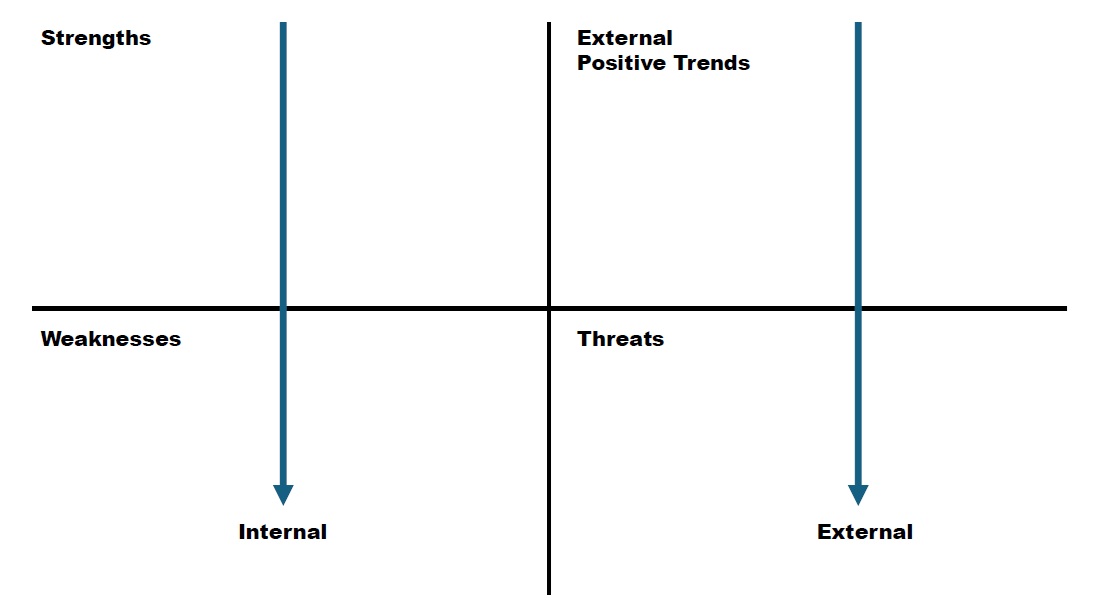
Pro tip: If the element starts with a percentage or cites a specific data source, it's correctly applied (e.g., "95% of consumers prefer low-sugar options"). If it's something your firm should do ("expand into healthcare"), it doesn't belong here—that's a potential strategy that emerges later.
This distinction is crucial because your strategic investments should emerge from combining your internal strengths with genuine external opportunities, not from a wishlist of activities your team wants to pursue.
Step 2: Separate Assessment from Analysis
Putting rigor into the SWET process means doing this in two distinct steps. The first step is performing the assessment and completing the quadrant exercise. The second is executing the actual analysis.

The Investment Analysis
Filter areas of Investment by combining Strengths with External opportunities. What are the top two or three things your firm does exceptionally well that can be combined with positive external market forces to create genuine investment opportunities?
Example: A firm that makes high-quality powdered drink mix very efficiently is looking to grow. When they examine the food and beverage landscape, they see 78% growth in low/no sugar drinks within foodservice segments like healthcare and universities over the past three years. Combined, these data points create a compelling investment area: leveraging manufacturing excellence to capture growing demand in institutional markets.
The Defense Analysis
Next, identify where you may need to Defend your territory by combining Weaknesses with Threats—what you don't do well that competitors or negative market trends might exploit.
Continuing the example: That same firm cannot manufacture liquid concentrates, but their top competitor just acquired liquid concentrate capabilities and is targeting the same healthcare segment. These facts combine to support investigating that capability gap, especially given the competitor's entrenchment in a growth market.
Pro tip: The more external facts you capture, the stronger your case becomes. When three or four market trends intersect with a capability your firm excels at, document them all. A robust SWET analysis starts with 15-20 items in each external quadrant.
Step 3: Focus on Investment and Defense Priorities
Trim extraneous elements from your SWET quadrants, keeping only those that support your Investment and Defense concepts. List these separately and prioritize based on their relative ability to impact the business.
You've now removed noise and bias from the assessment and delivered analysis that goes beyond forcing bullet points into a chart. Solid data now supports every recommendation, and you have a foundation ready for strategic planning.
Common Pushback and How to Handle It
Teams often resist this approach because it feels more restrictive than traditional brainstorming. But constraints actually improve strategic thinking by forcing precision over wishful thinking. When someone says "But we're missing opportunities to innovate," remind them that innovation without market validation is just expensive experimentation.
Implementation Timeline
Plan for:
- 2-3 hours for comprehensive data gathering
- 1 hour for the SWET assessment
- 1 hour for investment/defense analysis
- 30 minutes for prioritization and next steps
Pro tip: Keep your original complete quadrant chart! It's invaluable for future strategic updates. What data has changed? Which trends or competitive elements remain? Start with your original comprehensive chart each time and analyze from scratch once all data points are updated.
The Strategic Payoff
The difference between good strategy and great strategy often comes down to the rigor of your foundational analysis. SWET isn't just a reordered acronym—it's a discipline that separates data-driven decisions from expensive guesswork.
When you ground your Investment and Defense strategies in actual market data combined with honest capability assessment, you create strategic pillars that can withstand scrutiny and drive real results. Your recommendations become compelling because they're built on facts, not hopes.

Charley Orwig, MBA
Senior Strategy and Brand Marketing Advisor